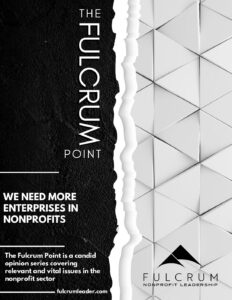
We Need More Enterprises in Nonprofits
The nonprofit sector has a complicated relationship with money.
For profit companies can be valued in the trillions while exploiting labor, extracting resources, and concentrating wealth. Markets applaud their scale.
Investors celebrate their dominance.
Yet when a nonprofit builds a billion-dollar endowment to sustain its mission for generations, critics question whether it is too rich. When an organization accumulates reserves to weather volatility, it is accused of hoarding. When it invests strategically, it is told it should simply spend more.
The stigma is real. And it is not going away.
Rather than waiting for cultural attitudes to change, nonprofit leaders must change their posture toward enterprise.
The Structural Deficit We Refuse to Name
Philanthropy alone will not meet the moment.
Most nonprofits operate with structural deficits. Demand for services continues to grow. Government funding remains unpredictable. Donor behavior shifts with economic cycles. Meanwhile expectations for outcomes, data, staffing, and compliance intensify.
We ask organizations to scale impact without scaling capital. This is not sustainable.
If the sector is serious about solving large problems, it must build large balance sheets. That requires more than annual campaigns and major gifts. It requires enterprise.
Enterprise Is Not a Betrayal of Mission
Building revenue generating capacity is not mission drift. It is mission protection.
Across the country, organizations are already experimenting. Nonprofits operate cafés that provide job training. They own real estate that generates predictable income. They run workforce enterprises, retail operations, consulting arms, and product lines.
These are not distractions. They are engines.
The question is not whether nonprofits should engage in enterprise. The question is why more of them are not doing so deliberately and at scale.
Inside or Outside the Organization
There are options.
Some enterprises can live inside the nonprofit. The organization invests in the venture, hires experienced operators, and reinvests profits into mission expansion.
The enterprise strengthens the balance sheet and stabilizes cash flow.
Other ventures may make more sense outside the organization. A nonprofit can launch a separate entity, take on investors, and structure the model so that profits fuel impact. Hybrid structures, benefit corporations, and mission aligned subsidiaries offer flexibility that did not exist a generation ago.
Nonprofits are not trapped. They are constrained only by imagination and comfort.
Think Bigger
The sector has internalized the idea that scarcity is virtuous. It is not.
Reserves are responsible. Endowments are strategic. Enterprises are necessary.
If we want organizations that endure, innovate, and expand their reach, we must normalize scale. We should celebrate nonprofits that become financial titans in service of human flourishing. Strong balance sheets protect programs, staff, and communities. Weak ones force compromise.
The future of the sector cannot be satisfied through philanthropy alone. It will require diversified revenue, disciplined investment, and bold experimentation.
Let us stop apologizing for strength.
Let us build nonprofits that can compete, endure, and lead.
For more information about Fulcrum Nonprofit Leadership, please visit our
website at www.fulcrumleader.com or reach out to us directly via email at
hello@fulcrumleader.com.