It’s Not About Growth. It’s About Scaling
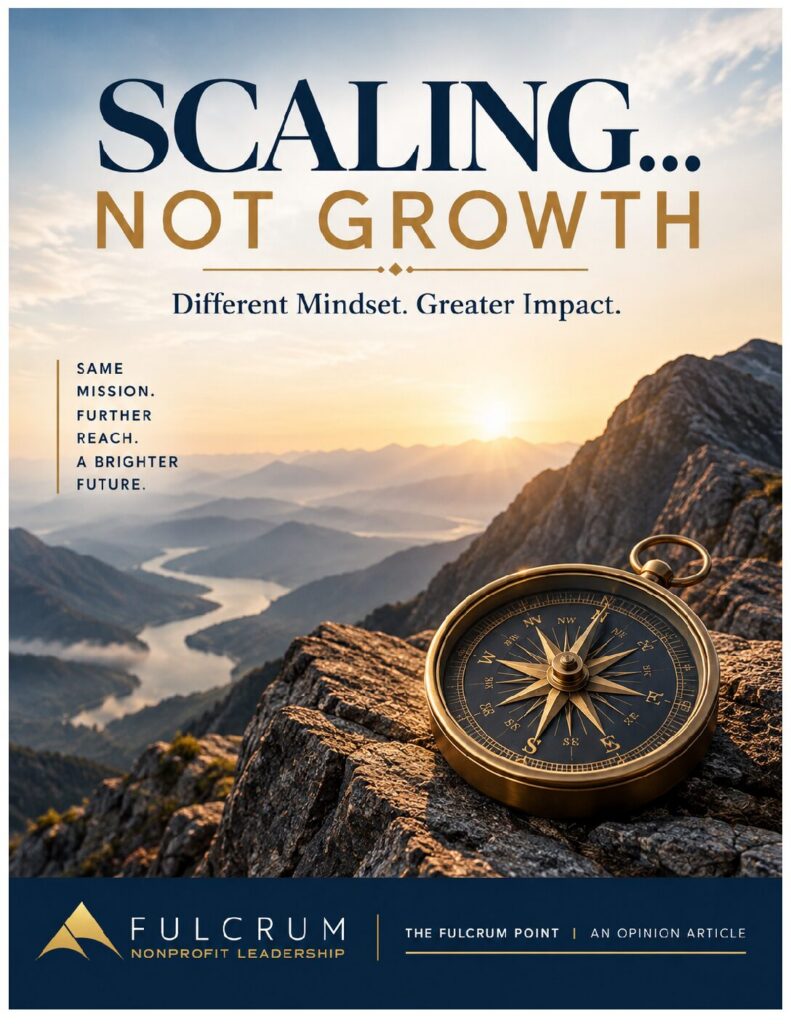
The Fulcrum Point – An Opinion Series The nonprofit sector loves growth. We celebrate bigger budgets, larger staffs, more programs, new locations, increased fundraising, and more people served. Growth appears […]
Leadership Has No Borders

Walk into almost any American bookstore and browse the leadership section. The names will be familiar. We read American CEOs, professors, consultants, military leaders, coaches, and entrepreneurs. There is tremendous […]
OVERHEAD IS FUEL – Stop Talking About Overhead as a Negative
For decades, the nonprofit sector has allowed one of its most damaging misconceptions to persist: overhead is bad. We apologize for it. Minimize it. Celebrate low overhead ratios as evidence […]
The Greatest Asset Is Already on Your Payroll
The Fulcrum Point – An Opinion Article Nonprofit leaders spend enormous amounts of time thinking about strategy. We develop strategic plans. We refine programs. We pursue funding. We invest in […]
The Business Mindset Every For-Purpose Leader Must Embrace
The Fulcrum Point – An Opinion Article Words matter. The labels we use shape the way people think, influence expectations, and ultimately affect behavior. Perhaps no label has unintentionally limited […]
More Trust, Less Turf: Why the CEO and CDO Relationship Determines Nonprofit Success
Every nonprofit has critical leadership relationships. The CEO and Board Chair. The CEO and CFO. The CEO and Program Leader. Yet few relationships have a greater impact on organizational success […]
Fulcrum Point – Opinion – The Healthy Power of Pruning
One of the healthiest governance practices an organization can embrace is the disciplined pruning of its board through clear, consistent term limits and intentional off ramps for disengaged or unproductive members.
Fulcrum Point – Opinion – The Most Dangerous Addition in Nonprofit Leadership: Avoidance
There is an addiction quietly damaging nonprofit organizations every single day.
It is not greed.
It is not ego.
It is not even burnout.
It is avoidance.
Avoidance is the hidden addiction of nonprofit leadership because it disguises itself as wisdom, patience, kindness, collaboration, discernment, and strategic caution. In reality, it is often fear wearing professional clothing.
And while most nonprofit leaders would never describe themselves as avoidant, the evidence frequently tells another story.
Avoidance shows up in delayed decisions.
Avoidance shows up in tolerated dysfunction.
Avoidance shows up in endless conversations without action.
Avoidance shows up in the unwillingness to confront underperformance, financial weakness, strategic drift, cultural toxicity, or changing realities.
The longer avoidance is tolerated, the more expensive it becomes.
Fulcrum Point – Opinion – Artificial Intelligence Will Separate the Leaders from the Reckless
Artificial intelligence is no longer experimental in the nonprofit sector.
It has moved from optional to operational. What began as curiosity is now embedded in back office systems, donor communications, grant writing, financial forecasting, and program analytics. AI tools are shaping messaging, automating workflows, and influencing decision making at every level of the organization.
The question is no longer whether to use AI.
The question is whether leaders will use it responsibly.
Fulcrum Point – Opinion – When Philanthropic Advisors Help and When They Harm
Philanthropic advisors are playing an increasingly influential role in the nonprofit ecosystem. For many donors and families, they provide real value. They bring structure to giving. They help clarify values. They conduct diligence. They introduce new ideas and organizations. At their best, they elevate strategy and increase impact. But as their influence grows, so do the risks. If we care about a healthy philanthropic marketplace, we must be honest about where advisory models can unintentionally distort it.